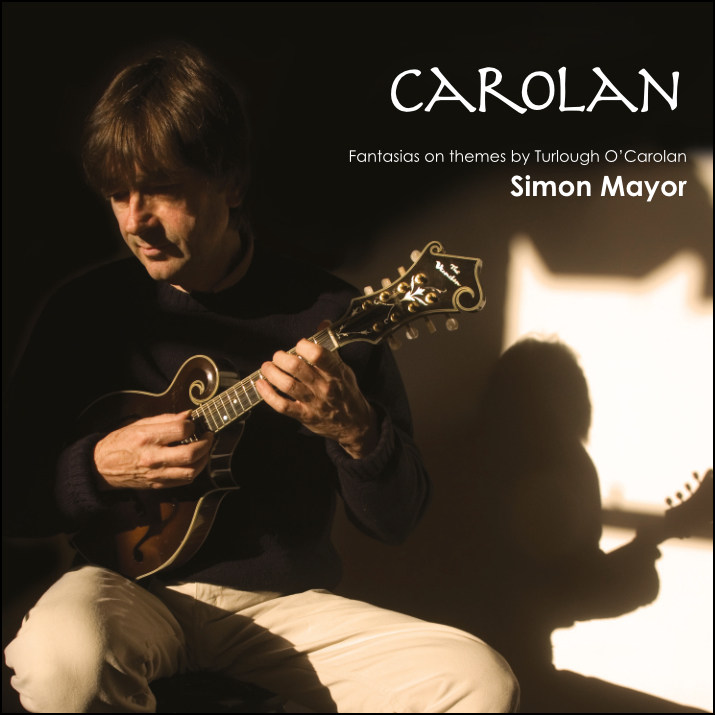
Carolan
Price range: £9.99 through £12.00
THE LATEST ALBUM FROM SIMON MAYOR
Fantasias on themes by Turlough O’Carolan.
New settings and musical explorations celebrating the melodic gems of Ireland’s musical treasure O’Carolan (1670-1738).
Featuring instruments of the mandolin and violin families and acoustic guitar.
With Hilary James (basses and vocals) and Florence Petit (violoncello).
Full sheet music transcriptions (99 PDF files) of this album are also available.
Press reviews
‘A demon on the mandolin, an angel on the fiddle: or vice versa? Either way, Simon Mayor creates music that borders on the divine… towering performances.’
Irish Music Magazine
‘A superb reminder of Mayor’s exceptional musicianship… shines a new light on Carolan’s timeless compositions.’
* * * * RnR Magazine (four star review)
‘Meltingly beautiful… fresh details emerge with each hearing.’
The Arts Desk
‘It is not just mastery of playing the instruments but the musical exploration of Turlough O’Carolan’s music which makes the album an absolute winner’
Folk London
‘Virtuoso Mayor [displays] emotional resonance from the beautiful sadness within Mrs. Sterling to the merriment of Lord Inchiquin.’
The Beat
‘Exceptionally fine… What astonishes me is not only the dexterity of his playing but also the piercing clarity of the sound he gets from eight strings and a piece of wood. Don’t hesitate to seek out this album; you will be rewarded many times over.’
Shire Folk
‘The music is timeless… a breath of fresh air that falls somewhere between The Chieftains and classical music.
Expose Online
‘Simon Mayor [is] a pre-eminent mandolin player… Carolan invites us to sit back and delight’
* * * * Songlines Magazine (four star review)
From the sleeve notes
Simon Mayor writes
I remember well the first time I heard the music of the Irish harper and composer Turlough O’Carolan (1670 – 1738). The Irish group Planxty were playing at Reading University Folk Club. As a student haunt, it was one I vastly preferred to the lecture hall or seminar; Russian social thought of the 18th century was never as exciting as this! But let’s not digress. Planxty had been booked by Hilary James, who – no coincidence here – features on this recording. The band played a couple of Carolan pieces and I was immediately captivated by the strength and grandness of the melodies. I subsequently became intimately acquainted with their first album and lost count of the times I heard their versions of Si Bheag Si Mhor and Planxty Irwin.
Carolan’s loss of sight through smallpox at the age of eighteen caused an intriguing twist to his legacy. Unable to notate his own music, those who did failed to record the harmonies he must have used, given that he played a polyphonic instrument, the harp. It was an unfortunate omission for anyone wishing to recreate his music with absolute historical accuracy. For me, this was never a strong desire, not least because I don’t play the harp! On the contrary, the ‘bare bones’, ‘melody only’ approach of his archivists had always proved alluring in itself. I wasn’t bound by the perceived constraints that hang over the music of more meticulously documented composers.
Because the task of archiving Carolan wasn’t undertaken to any large degree until some years after his death, some have argued that it would be impossible to notate so much music from memory, but this is not true. Those who play traditional music, and in particular those of us who have not been through music college, are usually blessed with well developed musical ears (helped in my own case by a father who taught me to sing in tonic sol-fa as a child). The trad musician can easily memorise tens or even hundreds of tunes.
Carolan stayed with me over the years. I gradually wrote numerous arrangements of his pieces for solo guitar, as well as duets, trios and quartets, mostly for the residential mandolin workshops I regularly host. While these all formed a basis for the music on this album, I decided to go beyond simple harmonisation by varying tempos, incorporating changes of key and mode, and using the harmonic sequences as a basis for extemporisation. With multi-track recording I was able to build arrangements using the instruments I play: guitar, violin, viola, and all sizes of the mandolin family, with splendiferous assistance from Florence Petit’s ‘cello and Hilary James’ basses and cameo vocals.
Related products
-
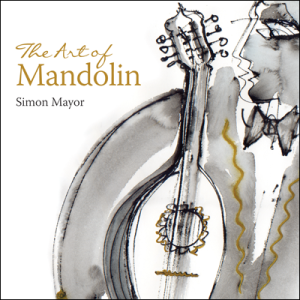
The Art of Mandolin
Price range: £9.99 through £12.00 Select options This product has multiple variants. The options may be chosen on the product page -
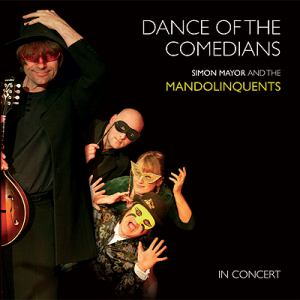
Dance of the Comedians
Price range: £9.99 through £12.00 Select options This product has multiple variants. The options may be chosen on the product page -
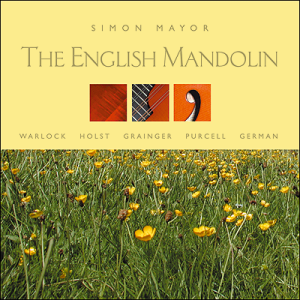
The English Mandolin
Price range: £9.99 through £12.00 Select options This product has multiple variants. The options may be chosen on the product page